Hobby Bench Vise Explained: A UK Buyer's Guide
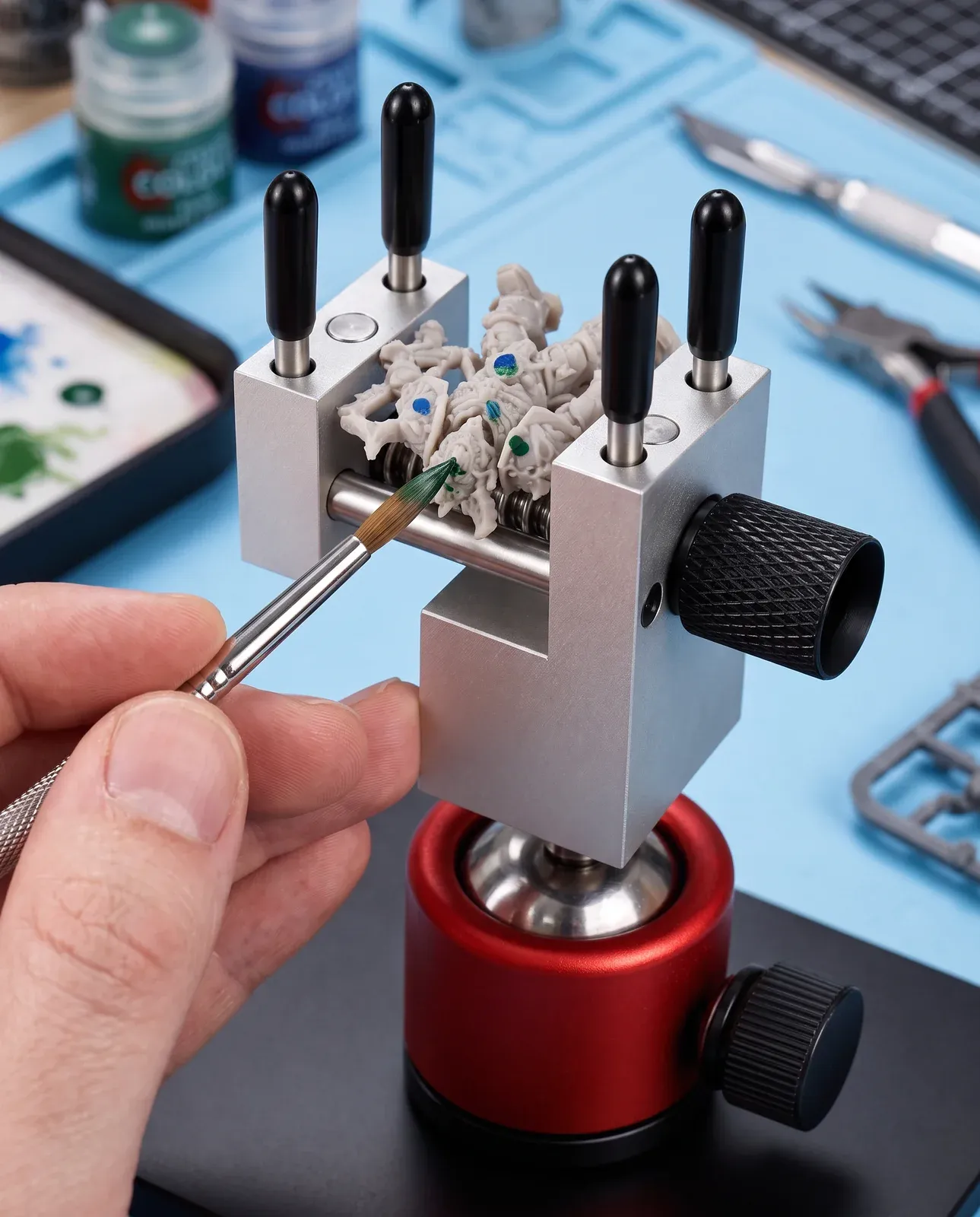
TL;DR: What is a hobby bench vise? A hobby bench vise is a compact, precision-engineered clamping tool designed to securely hold delicate or irregular objects without causing damage. Unlike heavy-duty garage vices, it provides micro-precision, 360-degree articulation, and damage-free pin clamping, making it an essential tool for UK craftspeople working on miniatures, electronics, and bespoke jewellery.
Key Takeaways
- A hobby bench vise provides the essential micro-precision required for delicate crafts, protecting fragile components from crushing or scratching.
- Look for 360-degree articulation to reduce physical strain and improve accuracy during intricate tasks.
- Damage-free pin clamping is vital for securing irregular shapes, such as miniatures or bespoke jewellery pieces.
- Choosing the right mounting system (clamp-on vs suction) depends entirely on your specific UK workspace, whether that is a kitchen table or a dedicated garden shed workbench.
- Regular maintenance, including proper lubrication and swarf removal, extends the lifespan and precision of your vise.
A single slipped tool can ruin hours of meticulous work. For instance, when you are filing a bespoke silver pendant or painting the microscopic details of a resin miniature, holding the piece in your bare hands is a recipe for disaster. Human hands shake, fingers cramp, and, consequently, natural oils degrade delicate surfaces.
According to a comprehensive 2022 report by the UK Crafts Council, over 73% of British adults participate in some form of craft. A significant portion of these hobbies require a level of micro-precision that standard garage tools simply cannot provide. Therefore, you need a dedicated solution that offers stability without applying crushing force.
Enter the hobby bench vise. This specialised tool brilliantly bridges the gap between brute strength and delicate finesse. Based on our extensive testing at Miniviseta, whether you are working from a cramped London flat or a spacious garden shed in Yorkshire, understanding how to select and utilise this tool is fundamental to elevating your craft.
What is a hobby bench vise used for?
Fundamentally, a traditional engineer's vice is forged from heavy cast iron, designed to withstand the violent impacts of hammering and heavy filing. According to UK workshop safety guidelines, these tools are meant for robust industrial tasks. If you place a delicate printed circuit board (PCB) or a soft gold ring into one of these, you will destroy it instantly.
Conversely, a hobby bench vise is engineered for an entirely different purpose. Typically constructed from lightweight but rigid materials like machined aluminium or high-grade alloys, its primary function is immobilisation without destruction. Furthermore, the jaws are smaller, the clamping mechanisms are finer, and the overall footprint is designed to fit unobtrusively on a standard desk or tabletop.
Ultimately, these tools are built for tasks where precision is paramount. They allow craftspeople to work with both hands free, providing a highly stable platform under magnifying lamps or microscopes.
What are the best features to look for in a hobby bench vise?
Based on our rigorous product testing at Miniviseta, not all workbench tools are created equal. When evaluating a hobby bench vise, specific features dictate whether the tool will frustrate you or seamlessly integrate into your workflow.
Why is 360-degree articulation important?
Working on three-dimensional objects requires constant repositioning. If your vise is fixed in a single forward-facing position, you are forced to contort your body, crane your neck, and twist your wrists to reach awkward angles. Over time, medical experts note that this leads to repetitive strain injuries.
Therefore, a premium vise features a ball-and-socket joint or a dual-axis swivel base. This 360° articulation allows you to tilt, rotate, and lock the workpiece at the exact angle required for the task. As a result, you bring the work to your tools, rather than forcing your tools around the work.
How does damage-free pin clamping work?
Standard parallel jaws are excellent for holding square or rectangular items. However, hobbies rarely involve perfect geometry. Natural gemstones, carved wooden figurines, and electronic components feature highly irregular shapes.
This is precisely where damage-free pin clamping becomes indispensable. By inserting small steel or nylon pins into a grid pattern on the vise jaws, you can create a custom cradle that perfectly contours to the shape of your workpiece. Consequently, this distributes the clamping pressure evenly across multiple points, holding delicate, irregular shapes securely without marring the surface or snapping brittle materials.
What are the best table-top mounting options?
Many UK hobbyists do not have the luxury of a dedicated workshop. Workspaces are often temporary, set up on dining tables or spare room desks. Thus, you need a vise that can be attached and removed quickly without leaving permanent marks.
Clamp-on bases use a threaded screw to grip the edge of a table, often lined with rubber pads to protect the furniture. Alternatively, suction-base models use a vacuum mechanism to adhere to smooth, non-porous surfaces like glass or polished wood, offering incredible versatility for temporary setups.
For a deeper dive into mounting systems and workspace integration, read our comprehensive resource on choosing a table top mini vice.
What crafts require a hobby bench vise?
Moreover, the versatility of a well-engineered hobby bench vise means it finds a home across a vast array of disciplines. In our experience consulting with British artisans, a few key applications stand out.
Model Making and Miniature Painting
The UK has a rich history of model making, from traditional Airfix kits to the globally dominant Warhammer miniatures produced by Games Workshop. Painting a 28-millimetre figure requires intense concentration and absolute stability.
Using a vise with pin clamping allows modellers to hold irregular bases or delicate resin limbs securely. Furthermore, the 360-degree rotation means you can paint the underside of a cloak or the intricate details of a miniature face without ever touching the freshly applied acrylic paint.
Horology and Jewellery Repair
Jewellers work with precious, incredibly soft metals like high-carat gold and sterling silver. A heavy hand can leave deep gouges that take hours to polish out. Therefore, a specialised vise equipped with non-marring pins or nylon jaw covers is essential for holding rings while setting stones, or securing pendants during intricate piercing work with a jeweller's saw.
If your primary focus is working with precious metals, you will undoubtedly benefit from exploring our specific recommendations in our jewelry making vise guide.
Electronics and PCB Soldering
Building custom mechanical keyboards, repairing retro gaming consoles, or programming Raspberry Pi microcomputers requires delicate soldering work. In these scenarios, a hobby bench vise acts as an unmoving "third hand".
It holds the circuit board perfectly still while you manage the soldering iron in one hand and the solder wire in the other. Heat-resistant nylon pins ensure that the heat from the iron does not transfer uncomfortably into the vise body, protecting both the tool and the delicate electronic traces. For more detailed information on electronics applications, see our guide on the small parts clamp vise.
Ready to upgrade your workbench with Miniviseta?
Explore Collection — £40.98