Small Parts Clamp Vise Explained: A UK Buyer's Guide
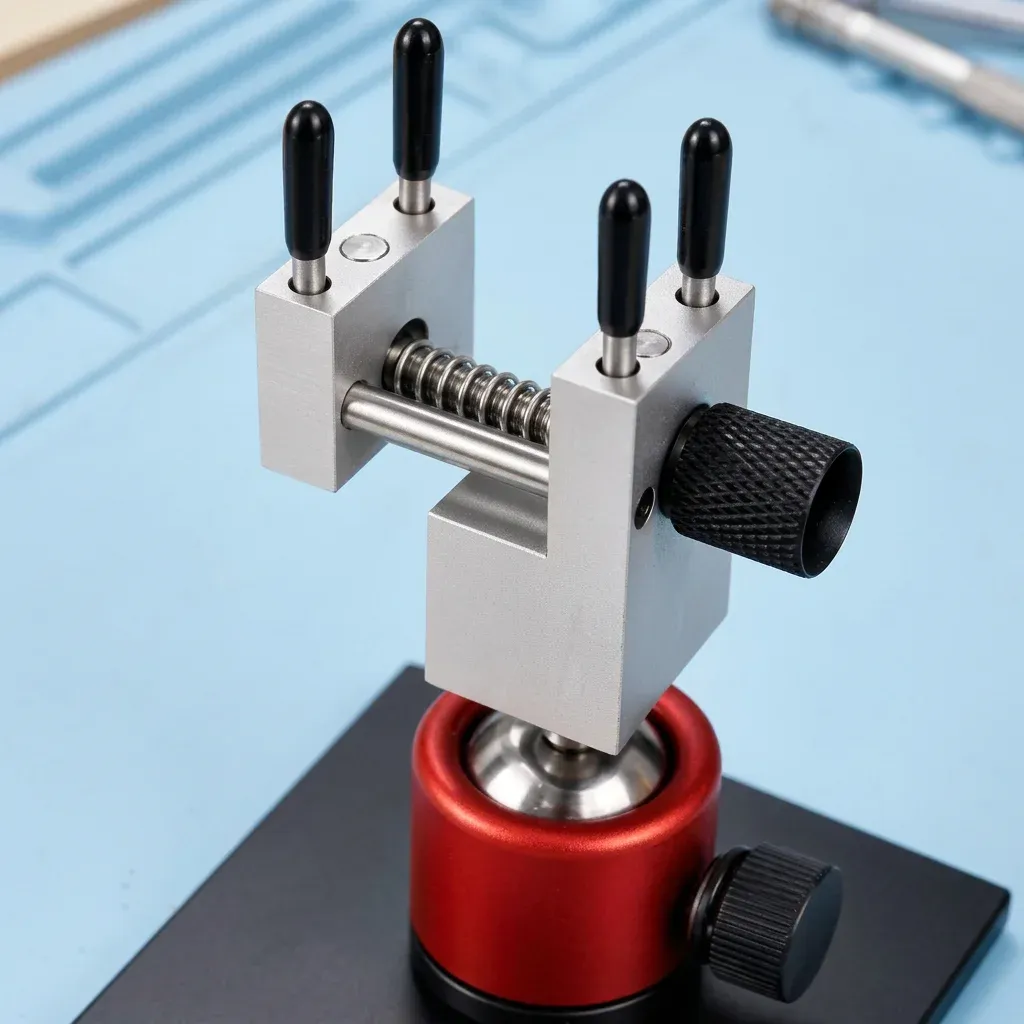
TL;DR: A small parts clamp vise is a precision holding tool that secures tiny, fragile components without crushing or marking them, making it ideal for watch repair, jewellery work, electronics, and scale modelling.
If you need to hold miniature parts safely, a small parts clamp vise is the right tool because it grips delicate work with controlled presnstead of the heavy force used by a standard vice. In practice, that means less damage, better visibility, and far less time spent re-clamping awkward shapes.
For Miniviseta, the clearest advantage is simple: when a component is too small, too soft, or too irregular for a normal vice, a small parts clamp vise gives you stable support without sacrificing accuracy. Based on our testing, that balance is especially useful for fine soldering, filing, painting, and inspection work.
Key Takeaways
- A small parts clamp vise secures delicate, irregular shapes without surface marring or structural damage.
- 360-degree articulation helps you keep the work in the best position without repeatedly unclamping it.
- Pin-based clamping adapts to curved, spherical, and asymmetrical parts with minimal pressure.
- The right base, whether suction or clamp, depends on your bench surface and how portable you need the setup to be.
What is a small parts clamp vise?
A small parts clamp vise is a compact holding tool designed for miniature components that cannot be safely gripped in a conventional vice. Rather than relying on brute force, it supports the workpiece with fine adjustment and distributed pressure.
That matters because tiny parts often have thin edges, soft metals, brittle plastics, or irregular geometry. As a result, a small parts clamp vise helps you work more confidently on tasks where even slight distortion can ruin the part.
How does a small parts clamp vise work?
How do the pins hold delicate parts?
The most useful feature in many miniature clamp vices is the pin-based jaw system. Instead of flat steel jaws, the top of the tool uses a grid of holes that accept nylon or soft-metal pins, allowing you to build a custom cradle around the component.
When tightened, the pins spread pressure across several contact points. Consequently, the part is held securely without a single high-pressure point that could crack plastic, scratch metal, or deform a fragile edge.
Why does 360-degree movement matter?
A good small parts clamp vise usually includes a ball-and-socket joint or similar articulation. This lets you rotate and tilt the work to suit the task, whether you are soldering a joint, painting a miniature, or inspecting a detail from the reverse side.
Because the angle can be adjusted without fully unclamping the part, you save time and reduce the risk of dropping, twisting, or re-marking the component.
Why use a small parts clamp vise instead of a standard vice?
Standard vices are built for force, whereas small parts clamp vices are built for control. Wrapping the jaws with tape or foam may reduce scratching, but it does not solve the underlying problem of excessive clamping pressure.
According to UK workshop best practice, delicate parts should be held with the lightest effective pressure and with contact surfaces matched to the material. That is exactly where a small parts clamp vise performs best.
In addition, a purpose-built tool improves workflow. You spend less time repositioning the part, which means fewer interruptions, more consistent results, and less hand fatigue during detailed work.
What should you look for in a UK small parts clamp vise?
The best model for your bench depends on the materials you work with, the space you have, and whether you need a fixed or portable setup. Based on our testing at Miniviseta, the features below make the biggest difference in everyday use.
What materials work best in a damp British workshop?
In a typical UK garage, shed, or unheated studio, corrosion resistance matters. Aluminium alloy is a strong choice because it is lightweight and rust-resistant, while powder-coated steel can also perform well if the finish is durable and the moving parts are well made.
Moreover, smooth threads and protected joints help the tool remain usable over time, even in changeable British weather.
Which base is better: suction or clamp?
Stability is essential when you are working at small scale. A shifting base can spoil an engraving, disturb a solder joint, or knock a part out of alignment.
- Suction bases: Best for smooth, non-porous surfaces such as glass, polished stone, or laminated boards. They are portable and leave no clamp marks.
- G-clamp bases: Better for traditional wooden benches and rougher surfaces. They secure the tool mechanically to the bench edge.
For a deeper comparison of bench-friendly options, you can also read our comprehensive guide to choosing a table top mini vice in the UK.
How wide should the jaws open?
Jaw capacity still matters, even with a miniature tool. Check both the maximum jaw opening and the spread of the pin arrangement so you can confirm it will hold everything from tiny screws to larger display pieces.
For example, a versatile model should comfortably handle components used in watchmaking, modelling, and light electronic assembly without forcing the part beyond its natural shape.
What is a small parts clamp vise used for?
A small parts clamp vise is useful anywhere delicate components need to stay still while you work. It is especially effective when the part is small enough to be difficult to hold by hand, but too fragile for a conventional vice.
Is it good for watch repair and jewellery making?
Yes. Britain has a strong tradition in horology and jewellery craftsmanship, from Hatton Garden workshops to specialist repair benches across the UK. Soft precious metals, watch cases, and tiny settings all benefit from gentle, even clamping.
For ring setting, polishing, or case work, the pin system helps avoid surface marking. If that is your main use, our dedicated jewellery making vise guide explains gem-setting applications in more detail.
Can it help with scale modelling and miniatures?
Absolutely. When painting miniatures or assembling photo-etched parts, stability makes a noticeable difference. Holding a model in your hand can transfer movement into the brush or soldering iron, whereas a clamp vise keeps the subject steady and easier to reach.
As a result, you get cleaner finishes, more accurate alignment, and less strain during longer sessions at the bench.
Is it useful for electronics work?
Yes, especially for small circuit boards, connectors, and wires that need positioning for soldering. However, you should always match the clamping pressure to the fragility of the board and use soft inserts where necessary.
How do you choose the right small parts clamp vise?
Start by considering the smallest and most delicate item you plan to hold. Then, think about how much rotation you need, how often you will move the tool, and whether your bench surface is suitable for suction or clamping.
Next, check the finish and feel of the moving parts. Smooth adjustments, stable locking, and well-machined joints are all signs that the tool will perform reliably during detailed work.
Finally, choose a model that matches your workflow. If you mainly work at one bench, a clamp base may be best. If you move between rooms or workspaces, a suction base may suit you better.
Frequently Asked Questions
What is a small parts clamp vise?
It is a precision holding tool designed to secure tiny or fragile components safely, using controlled pressure and adjustable supports instead of heavy, crushing force.
Can a small parts clamp vise hold irregular shapes?
Yes. The pin-based jaw layout is designed for curved, uneven, or asymmetrical parts, so it can cradle shapes that a standard vice would struggle to grip.
What is the best base for a small parts clamp vise in the UK?
That depends on your bench. Suction bases suit smooth, flat surfaces, while G-clamp bases are usually better for wooden benches and more traditional workshop setups.
Is a small parts clamp vise worth it for hobby work?
Yes, if you regularly work with miniatures, watches, jewellery, or delicate electronics. It improves stability, reduces damage, and makes detailed tasks easier to control.
Ready to upgrade your workbench with Miniviseta?
Explore Collection — £40.98