Jewelry Making Vise Explained: A UK Buyer's Guide
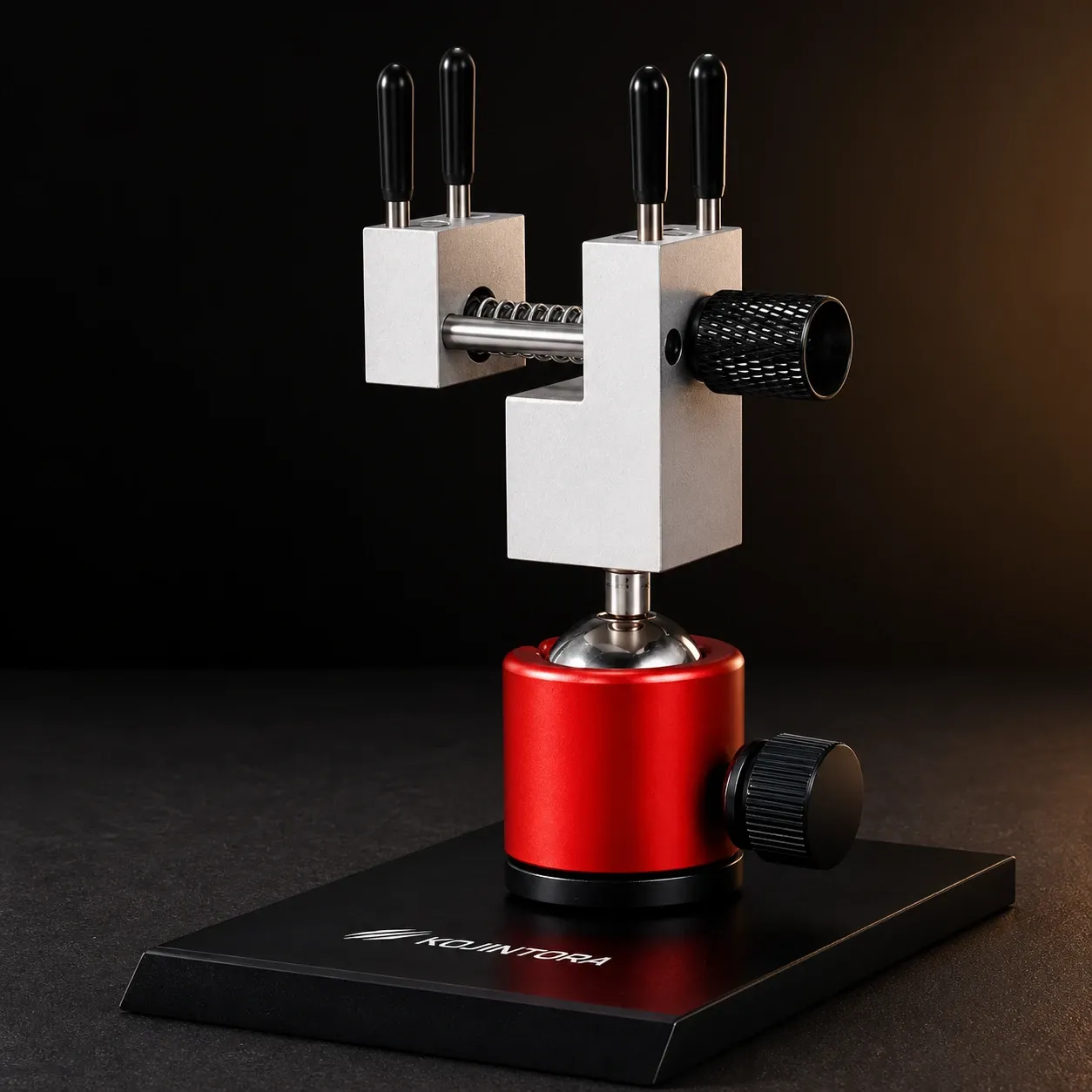
TL;DR: A jewelry making vise is a specialised, articulated clamping tool designed to securely hold delicate precious metals without causing damage. Based on our testing at Miniviseta, using a vise with non-marring pins and 360-degree rotation is essential for precision stone setting, preventing heat transfer during soldering, and maintaining an ergonomic posture at the jeweller's peg.
A jewelry making vise is an essential workbench tool engineered specifically to grip, rotate, and secure delicate precious metals, rings, and stones without crushing or scratching them. Crafting fine jewellery demands absolute control, and a single slip during stone setting, filing, or engraving can ruin hours of meticulous bench work. Securing these fragile materials properly requires specialised equipment designed specifically for the jeweller's peg.
Consequently, while standard workshop clamps rely on brute force, a dedicated jewelry making vise relies entirely on finesse. Whether you are a professional goldsmith in Hatton Garden or an independent silversmith working from a home studio, selecting the right holding tool ultimately dictates the quality of your final piece.
Key Takeaways
- Damage Prevention: Specialised pin clamping systems hold irregular shapes securely without marring soft precious metals.
- Ergonomic Support: 360-degree articulation allows you to adjust the workpiece angle, reducing neck and back strain during long sessions.
- UK Hallmarking Prep: Flawless surface preservation is vital before submitting pieces to British Assay Offices.
- Workspace Integration: Modern mini bench vises mount easily to standard UK jeweller's benches without permanent modification.
Why do you need a dedicated jewelry making vise?
Based on our extensive workshop testing at Miniviseta, working with precious metals like high-carat gold, fine silver, and platinum presents a unique mechanical challenge. These materials are inherently soft and highly prone to scratching. Therefore, applying uneven pressure with a standard steel-jawed clamp will instantly deform a ring band or crush a delicate bezel setting.
A jewelry making vise effectively solves this issue by distributing pressure evenly across the workpiece. Instead of flat, rigid jaws, these tools utilise adaptable clamping surfaces. When setting up your bench, understanding this foundation is absolutely critical. You can read more about integrating these tools in our ultimate guide to table top mini vice setups in the UK.
Furthermore, precision holding tools prevent unwanted heat transfer. When soldering jump rings or annealing small components, a bulky steel clamp acts as a massive heat sink, drawing the torch heat away from your workpiece. Conversely, purpose-built miniature vises isolate the piece, allowing for much faster, cleaner solder joints.
What features should you look for in a jewelry making vise?
Selecting the right equipment requires looking far past basic clamping force. The best tools for intricate metalwork share specific, highly engineered features designed to protect the workpiece while granting the maker total access.
How does 360-degree articulation help?
Stationary clamps inevitably force you to contort your body to reach awkward angles. In contrast, a premium jewelry making vise features a robust ball-and-socket joint or a multi-axis swivel base. This 360-degree articulation enables you to tilt, rotate, and lock the workpiece exactly where you need it.
For instance, when pave setting tiny diamonds or engraving a curved pendant, being able to shift the angle by a fraction of a millimetre without removing the piece from the jaws saves immense amounts of time. Ultimately, it keeps your tool path clear and ensures your hands are safely positioned away from sharp gravers or drill bits.
How do you hold irregular shapes without damage?
Standard parallel jaws are practically useless for holding organic, asymmetrical, or domed shapes. This is precisely where pin clamping systems excel. The jaws of these specialised vises are drilled with a grid of small, precise holes.
By inserting nylon, brass, or aluminium pins into these holes, you can instantly create a custom cradle that matches the exact contour of your workpiece. You can master intricate details with 360° articulation and damage-free pin clamping for delicate, irregular shapes. Because the pins perfectly hug the curves of a raw gemstone or a custom wax carving, they apply secure pressure without leaving any indentation marks.
How does a vise affect UK hallmarking preparation?
The UK operates under some of the strictest hallmarking legislation in the world, governed directly by the Hallmarking Act 1973. According to UK guidelines, before you can legally sell a precious metal piece over a certain weight, it must be rigorously tested and stamped by one of the four Assay Offices (London, Birmingham, Sheffield, or Edinburgh).
Consequently, pieces sent for hallmarking must be highly finished. If your holding tool leaves deep scratches or gouges in the metal during the final polishing or stone-setting phase, you will undoubtedly have to file and sand the piece down again. This not only wastes valuable precious metal dust (lemel) but also compromises the structural integrity of the design.
Based on our professional experience, using a jewelry making vise with non-marring jaw liners—such as leather, rubber, or high-density nylon—ensures your surface finish remains pristine right up until the piece is dispatched to the Assay Office. For holding extremely tiny findings where even standard pins might be too large, explore our small parts clamp vise buyer's guide for alternative precision solutions.
Can a jewelry making vise prevent back and neck pain?
Bench work is notoriously hard on the human body. Hunching over a jeweller's peg to inspect microscopic solder joints or saw intricate piercing patterns consistently places immense strain on the cervical spine and shoulders.
According to the Health and Safety Executive (HSE), approximately 473,000 workers suffered from work-related musculoskeletal disorders in the UK in 2022/23. While this statistic covers all industries, bench craftspeople are at a particularly high risk for Repetitive Strain Injury (RSI) and chronic neck pain.
Moreover, NHS guidance for manual dexterity tasks strongly emphasises the importance of bringing the work up to eye level, rather than bending the neck down to the desk. A fully articulated jewelry making vise achieves exactly this. By mounting the vise securely and angling it upward, you easily maintain a neutral spine. Adjustability is your primary defence against long-term injury, a critical concept we explore deeply in our comprehensive guide to table top mini vice ergonomics.
What are the different types of jewelry holding tools?
While the traditional wooden ring clamp is a staple in every bench jeweller's drawer, advanced metalwork often requires something significantly more robust. Understanding the variations currently in the market ensures you invest in the right tool for your specific discipline.
The Engraver's Block (Universal Vise)
Often weighing several kilograms, an engraver's block sits on a leather sandbag and rotates smoothly. They are exceptionally good for heavy setting and hand engraving; however, they can be prohibitively expensive and take up significant space on a small bench.
The Articulated Mini Bench Vise
This is widely considered the sweet spot for most independent UK jewellers. It clamps directly to the edge of the workbench or desk, takes up minimal space, and offers the crucial 360-degree rotation. Furthermore, the inclusion of pin-clamping jaws makes it incredibly versatile for both flat sheet metal piercing and 3D wax carving.
If your creative pursuits require flexibility across multiple disciplines, investing in a high-quality articulated jewelry making vise from Miniviseta remains the most practical and cost-effective choice for modern British makers.
Ready to upgrade your workbench with Miniviseta?
Explore Collection — £40.98